
Green Tea (Camellia Sinensis) in Dentistry: Exploring Green Tea’s Antioxidant and Antimicrobial Benefits for Salivary Gland
Disease and Oral Hygiene

1*Bharat Chouhan, 2Dr. Pankaj Kushwah, 3 Mr. Azaruddin Shaikh
1*Department of Pharmaceutical Chemistry, Scholar of M. Pharm, Swami Vivekanand College of Pharmacy (SVCP), Indore, M.P., India, 452020; 2Department of Pharmacognosy, Professor, Chameli Devi Institute of Pharmacy, Indore, M. P. India; 3Department of Pharmacology, Assistant Professor,
B. M. College of Pharmaceutical Education & Research, Indore, M.P. India
Corresponding Author: Bharat Chouhan, Email: pharm06bharat@gmail.com
ORCID ID : https://orcid.org/0009-0002-2902-1684
ABSTRACT
Green tea ( Camellia sinensis ) has gained significant attention in dentistry due to its potent antioxidant and antimicrobial properties. Rich in polyphenols, particularly catechins such as epigallocatechin gallate (EGCG), green tea plays a crucial role in maintaining oral health by reducing oxidative stress and preventing microbial infections. Its antioxidant properties help in combating free radicals, thereby protecting salivary glands from inflammation and dysfunction. Additionally, green tea exhibits strong antimicrobial activity against various oral pathogens, including Streptococcus mutans and Porphyromonas gingivalis , which are responsible for dental caries and periodontal diseases. In salivary gland disorders, green tea has shown promise in alleviating conditions such as xerostomia (dry mouth) by enhancing salivary flow and reducing bacterial colonization. Its anti-inflammatory effects further aid in managing sialadenitis and other glandular infections. Moreover, green tea-based mouth rinses and toothpaste formulations have demonstrated efficacy in reducing plaque accumulation and improving overall oral hygiene.
With its natural bioactive compounds, green tea serves as a complementary therapeutic approach in dentistry, offering a safe and effective alternative to synthetic antimicrobial agents. Future research should focus on optimizing its formulations for enhanced clinical applications. This review highlights the potential of green tea in maintaining salivary gland health and promoting oral hygiene, reinforcing its role as a beneficial natural adjunct in dental care.
Keywords: Green Tea ( Camellia sinensis ), Antioxidant, Antimicrobial, Salivary Gland Disease, Oral Hygiene
INTRODUCTION
Green Tea in Dentistry:
Green tea ( Camellia sinensis ) has been widely recognized for its numerous health benefits, particularly in traditional medicine and modern healthcare applications (figure 1). It is rich in bioactive compounds such as polyphenols, catechins, flavonoids, and tannins, which contribute to its strong antioxidant and antimicrobial properties. These properties have gained significant interest in dentistry, as oral health is closely linked to oxidative stress and microbial infections.[1]
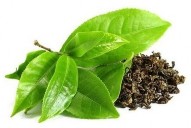
Figure 1: Green Tea ( Camellia sinensis ) [2]
Salivary glands play a vital role in maintaining oral homeostasis by producing saliva, which aids in digestion, lubrication, and protection of the oral cavity against microbial pathogens (figure 2)
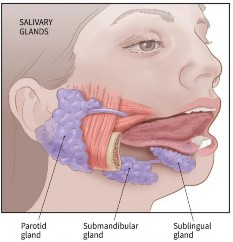
Figure 2: Salivary Glands [3]
Dysfunction of the salivary glands can lead to conditions such as xerostomia (dry mouth), sialadenitis (inflammation of the salivary glands), and increased susceptibility to dental caries and periodontal diseases. Recent studies suggest that green tea can aid in preventing and managing such conditions due to its ability to reduce inflammation, combat bacterial infections, and promote saliva secretion.[4]
Beyond its role in salivary gland health, green tea has shown promising results in reducing dental plaque, preventing cavities, and improving overall oral hygiene. Various green tea formulations, including mouth rinses, toothpaste, and chewing gum, have been developed to enhance its efficacy in dental care. As a natural and safe alternative to synthetic drugs and
antimicrobial agents, green tea provides an effective complementary approach in dentistry, offering both preventive and therapeutic benefits.[5]
ANTIOXIDANT PROPERTIES OF CAMELLIA SINENSIS AND THEIR ROLE IN ORAL HEALTH
Oxidative stress plays a crucial role in the pathogenesis of many oral diseases, including periodontal disease, salivary gland dysfunction, and oral cancer. Reactive oxygen species (ROS) and free radicals generated by various metabolic processes can lead to tissue damage, inflammation, and impaired wound healing. Green tea is a rich source of antioxidants, particularly catechins, which help in neutralizing oxidative stress and protecting oral tissues.
Key Antioxidant Compounds in Green Tea:
-
Epigallocatechin gallate (EGCG) – The most potent catechin in green tea, EGCG has been shown to reduce oxidative damage, suppress inflammation, and promote tissue healing in oral diseases.
-
Epicatechin (EC) and Epigallocatechin (EGC) – These compounds exhibit strong free radical scavenging properties, preventing cellular damage in salivary glands and periodontal tissues.
-
Flavonoids and Tannins – These polyphenolic compounds help in reducing oxidative stress and strengthening the protective mechanisms of oral tissues.[6]
Role of Green Tea Antioxidants in Salivary Gland Function:
Salivary glands are particularly vulnerable to oxidative damage, which can impair their ability to produce and regulate saliva. This dysfunction can lead to dry mouth (xerostomia), an increased risk of dental caries, and a higher prevalence of oral infections. The antioxidant properties of green tea help in mitigating these effects by:
-
Reducing oxidative damage in salivary gland cells, thereby preserving their functional integrity.
-
Enhancing saliva secretion and maintaining moisture balance in the oral cavity.
-
Preventing inflammatory damage, thereby reducing the risk of sialadenitis and other gland-related disorders.[7]
Green Tea’s Role in Periodontal Health:
Periodontal diseases, including gingivitis and periodontitis, are associated with excessive oxidative stress and inflammation. Studies have shown that green tea catechins, particularly EGCG, help in:
-
Inhibiting the production of pro-inflammatory cytokines, reducing gum inflammation.
-
Protecting against collagen degradation, thereby preventing periodontal tissue destruction.
-
Enhancing the antioxidant defense mechanisms in periodontal tissues, improving overall gum health.[8]
-
ANTIMICROBIAL EFFECTS OF GREEN TEA ON SALIVARY GLAND DISEASES
Oral infections caused by bacterial overgrowth are a major concern in dentistry. Salivary glands, due to their continuous interaction with oral microbes, are prone to infections such as bacterial sialadenitis. Green tea’s antimicrobial effects make it a valuable natural agent in preventing and managing such conditions.
Mechanisms of Green Tea’s Antimicrobial Action:
Green tea exerts its antimicrobial effects through multiple mechanisms, including:
-
Disrupting Bacterial Cell Membranes – Green tea catechins interact with bacterial cell walls, leading to increased permeability and eventual cell lysis.
-
Inhibiting Bacterial Enzyme Activity – EGCG has been shown to inhibit bacterial enzymes such as glucosyltransferases, which play a role in plaque formation and biofilm development.
-
Reducing Bacterial Adhesion and Biofilm Formation – Green tea helps in preventing bacteria from adhering to oral surfaces, reducing plaque buildup and microbial colonization.
-
Altering Bacterial Metabolism – It interferes with the metabolic processes of pathogenic bacteria, limiting their ability to thrive in the oral cavity.[9]
Effectiveness of Green Tea Against Oral Pathogens:
Green tea has demonstrated significant antimicrobial activity against a wide range of oral pathogens, including:
-
Streptococcus mutans – The primary causative agent of dental caries, green tea inhibits its growth and prevents acid production that leads to tooth decay.
-
Porphyromonas gingivalis – A major pathogen in periodontitis, green tea catechins suppress its virulence factors and reduce gum inflammation.
-
Candida albicans – A common fungal pathogen in oral candidiasis, green tea has antifungal properties that help in preventing fungal overgrowth.
Green Tea in the Management of Salivary Gland Infections:
Salivary gland infections, particularly bacterial sialadenitis, can cause pain, swelling, and dysfunction in saliva secretion. Green tea can help in managing these infections by:
-
Reducing bacterial load – Regular use of green tea mouth rinses has been shown to lower bacterial colonization in salivary glands.
-
Decreasing inflammation – The anti-inflammatory effects of EGCG help in alleviating swelling and pain associated with gland infections.
-
Promoting saliva flow – Green tea stimulates saliva production, reducing the risk of xerostomia and secondary bacterial infections.[10]
Green tea ( Camellia sinensis ) has emerged as a promising natural agent in dentistry due to its strong antioxidant and antimicrobial properties. Its ability to neutralize oxidative stress makes it highly beneficial in preserving salivary gland function, preventing periodontal disease, and maintaining overall oral health. Additionally, its antimicrobial activity against major oral pathogens reinforces its potential as an adjunctive therapy in dental care.
The integration of green tea-based products, such as mouth rinses and toothpaste, into daily oral hygiene routines can provide significant benefits in preventing dental and salivary gland disorders. Future research should focus on optimizing green tea formulations and conducting clinical trials to further establish its efficacy in dental applications. Given its safety profile and therapeutic potential, green tea represents a valuable, natural alternative for enhancing oral health and managing salivary gland diseases.[11]
THERAPEUTIC APPLICATIONS OF GREEN TEA IN DENTAL AND SALIVARY GLAND DISORDERS
Green tea ( Camellia sinensis ) has been widely recognized for its medicinal properties, particularly in oral health. Its therapeutic potential in dentistry extends to managing various dental conditions, including periodontal diseases, dental caries, oral infections, and salivary gland disorders. The bioactive compounds in green tea, such as catechins (especially epigallocatechin gallate, EGCG), flavonoids, and polyphenols, contribute to its antioxidant, antimicrobial, and anti-inflammatory effects, making it a valuable natural remedy in oral care.[12]
Green Tea in Periodontal Disease Management:
Periodontal diseases, including gingivitis and periodontitis, are among the most common oral health issues. They are primarily caused by the accumulation of bacterial plaque, leading to gum inflammation, tissue destruction, and eventual tooth loss. Green tea has been shown to be highly beneficial in periodontal disease management due to its ability to:
-
Reduce inflammation – EGCG suppresses the production of pro-inflammatory cytokines, which contribute to gum swelling and redness.
-
Inhibit bacterial growth – Green tea catechins act against Porphyromonas gingivalis , Aggregatibacter actinomycetemcomitans , and Fusobacterium nucleatum , all of which are key pathogens in periodontal disease.
-
Enhance tissue healing – The antioxidant properties of green tea promote tissue regeneration and prevent oxidative damage in gum tissues.
-
Reduce bone loss – Studies suggest that green tea may help in preserving alveolar bone density by inhibiting osteoclast activity, which is responsible for bone resorption in periodontitis.
-
Green tea-based mouthwashes and toothpastes have been developed as adjuncts to traditional periodontal therapies. These formulations have demonstrated effectiveness in reducing plaque formation, controlling bacterial load, and improving overall gum health. [13]
Green Tea in the Prevention of Dental Caries:
Dental caries, or tooth decay, is primarily caused by the demineralization of tooth enamel due to acid production by cariogenic bacteria such as Streptococcus mutans (figure 3).[14]
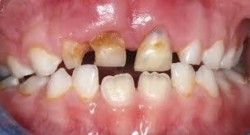
Figure 3: Dental Caries [15]
Green tea has been found to play a significant role in caries prevention through:
-
Inhibiting bacterial adherence – Green tea catechins prevent S. mutans from attaching to the enamel surface, reducing plaque formation.
-
Neutralizing acids – The natural fluoride content in green tea helps in buffering acids and promoting remineralization of enamel.
-
Suppressing bacterial metabolism – Green tea disrupts the metabolic pathways of cariogenic bacteria, reducing their ability to produce acid.
Green tea extracts have been incorporated into chewing gums, mouth rinses, and fluoride-based toothpaste, providing an additional layer of protection against tooth decay. Clinical studies have demonstrated that regular consumption of green tea significantly lowers caries risk and improves oral hygiene.[16]
Green Tea in the Management of Xerostomia (Dry Mouth):
Xerostomia, or dry mouth, is a condition characterized by reduced saliva production, often resulting from medications, systemic diseases (such as Sjögren’s syndrome), or radiation therapy (figure 4). [17]
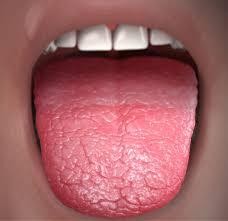
Figure 4: Xerostomia (Dry Mouth) [18]
Saliva plays a critical role in maintaining oral health by:
-
Lubricating oral tissues.
-
Aiding in digestion.
-
Controlling microbial growth.
-
Protecting enamel through remineralization.
Green tea has been found to be effective in stimulating saliva production, making it a potential natural remedy for xerostomia. The polyphenols in green tea activate salivary glands, enhancing moisture levels in the oral cavity. Additionally, green tea’s antimicrobial properties help in reducing the overgrowth of opportunistic pathogens, such as Candida albicans , which is commonly associated with dry mouth-related oral infections.
Green tea mouth rinses and lozenges have been explored as therapeutic options for individuals suffering from xerostomia. These formulations not only alleviate dryness but also improve oral comfort and reduce the risk of secondary infections.[19]
Green Tea in the Treatment of Oral Ulcers and Wound Healing:
Oral ulcers, including aphthous ulcers and traumatic lesions, can cause significant discomfort and pain. Green tea has been shown to accelerate wound healing and provide symptomatic relief in ulcer management. Its wound-healing properties are attributed to:
-
-
Anti-inflammatory effects – Green tea reduces cytokine-mediated inflammation, decreasing pain and swelling.
-
Tissue repair promotion – EGCG enhances fibroblast activity, promoting faster healing of oral mucosal tissues.
-
Antibacterial action – Green tea prevents secondary infections that may delay ulcer healing.
Green tea-based gels and topical applications have been developed for treating oral ulcers, demonstrating positive results in clinical studies. Regular use of green tea extracts can help in managing recurrent aphthous stomatitis and post-surgical wounds.[20]
Green Tea in the Prevention of Oral Cancer:
Oral cancer is a significant global health concern, often associated with tobacco use, alcohol consumption, and human papillomavirus (HPV) infection. The anticancer potential of green tea has been widely studied, with research suggesting that EGCG plays a key role in:
-
Inducing apoptosis (programmed cell death) in cancer cells.
-
Inhibiting tumor angiogenesis (formation of new blood vessels that support tumor growth).
-
Preventing DNA damage caused by oxidative stress.
-
Suppressing the proliferation of malignant cells.
Green tea polyphenols act as natural chemopreventive agents, helping in reducing the risk of oral carcinogenesis. Regular consumption of green tea has been associated with a lower incidence of oral cancer, making it a potential adjunct in cancer prevention strategies. [21]
FUTURE PERSPECTIVES:
Despite the extensive research supporting the benefits of green tea in dentistry, further studies are required to optimize its therapeutic applications. Future directions in green tea research should focus on:
-
Developing advanced green tea formulations – Enhancing the bioavailability of catechins through nano-encapsulation or controlled-release systems may improve their efficacy in dental treatments.
-
Conducting large-scale clinical trials – While in vitro and animal studies have provided promising results, more human clinical trials are needed to validate green tea’s effectiveness in various oral conditions.
-
Exploring synergistic effects with other natural compounds – Combining green tea with other plant-derived bio actives (e.g., propolis, aloe vera, curcumin) may enhance its therapeutic potential in oral care.
-
Integrating green tea into professional dental treatments – The use of green tea extracts in dental fillings, varnishes, and periodontal therapies may revolutionize preventive dentistry. [22, 23]
-
CONCLUSION
Green tea ( Camellia sinensis ) has emerged as a powerful natural agent in dental and salivary gland health. Its antioxidant, antimicrobial, and anti-inflammatory properties make it an effective adjunct in managing periodontal diseases, dental caries, xerostomia, oral ulcers, and even oral cancer prevention. The incorporation of green tea-based formulations in dental care products, such as toothpaste, mouth rinses, and gels, offers a promising approach to improving oral hygiene and preventing oral diseases.
While green tea cannot entirely replace conventional dental treatments, it serves as a valuable complementary therapy with minimal side effects. The growing interest in natural remedies and herbal medicine further highlights the importance of green tea in modern dentistry. With continued research and innovation, green tea has the potential to revolutionize preventive and therapeutic dentistry, providing a safer and more holistic approach to oral healthcare.
REFERENCES
-
Ng, T.K.; Chu, K.O.; Wang, C.C.; Pang, C.P. Green Tea Catechins as Therapeutic Antioxidants for Glaucoma Treatment. Antioxidants 2023, 12, 1320. [Google Scholar] [CrossRef]
-
https://5.imimg.com/data5/SELLER/Default/2021/3/SZ/RN/ZM/11724855/green-tea- dry-extract-camellia-sinensis.jpg
-
https://www.ca ncer.org/adobe/dynamicmedia/deliver/dm-aid--0543e3f1-5b83-4f87- 8ce6-8a0d4c84e91b/salivary-glands.jpg?preferwebp=true&quality=82
-
Kong, C.; Zhang, H.; Li, L.; Liu, Z. Effects of green tea extract epigallocatechin-3- gallate (EGCG) on oral disease-associated microbes: A review. J. Oral. Microbiol. 2022, 14, 2131117. [Google Scholar] [CrossRef] [PubMed]
-
Musial, C.; Kuban-Jankowska, A.; Gorska-Ponikowska, M. Beneficial Properties of Green Tea Catechins. Int. J. Mol. Sci. 2020, 21, 1744. [Google Scholar] [CrossRef] [PubMed]
-
Cabrera, M.; Taher, F.; Llantada, A.; Do, Q.; Sapp, T.; Sommerhalter, M. Effect of Water Hardness on Catechin and Caffeine Content in Green Tea Infusions. Molecules 2021, 26, 3485. [Google Scholar] [CrossRef] [PubMed]
-
Zwolak, I. Epigallocatechin Gallate for Management of Heavy Metal-Induced Oxidative Stress: Mechanisms of Action, Efficacy, and Concerns. Int. J. Mol. Sci. 2021, 22, 4027. [Google Scholar] [CrossRef]
-
Graham H.N. Green tea composition, consumption, and polyphenol chemistry. Prev. Med. 1992; 21:334–350. doi: 10.1016/0091-7435(92)90041-F. [ DOI ] [ PubMed]
[ Google Scholar]
-
Rashidi B., Malekzadeh M., Goodarzi M., Masoudifar A., Mirzaei H. Green tea and its anti-angiogenesis effects. Biomed. Pharmacother. 2017; 89:949–956. Doi: 10.1016/j.biopha.2017.01.161. [ DOI ] [ PubMed ] [ Google Scholar]
-
Nibir Y.M., Sumit A.F., Akhand A.A., Ahsan N., Hossain M.S. Comparative assessment of total polyphenols, antioxidant and antimicrobial activity of different tea varieties of Bangladesh. Asian Pac. J. Trop. Biomed. 2017; 7:352–357. Doi: 10.1016/j.apjtb.2017.01.005. [ DOI ] [ Google Scholar]
-
Chen, F.; Liu, Q. Demystifying phytoconstituent-derived nanomedicines in their immunoregulatory and therapeutic roles in inflammatory diseases. Adv. Drug Deliv. Rev. 2022, 186, 114317. [Google Scholar] [CrossRef]
-
Salatin, S.; Bazmani, A.; Shahi, S.; Naghili, B.; Memar, M.Y.; Dizaj, S.M. Antimicrobial Benefits of Flavonoids and their Nanoformulations. Curr. Pharm. Des. 2022, 28, 1419–1432. [Google Scholar] [CrossRef]
-
Bakun, P.; Mlynarczyk, D.T.; Koczorowski, T.; Cerbin-Koczorowska, M.; Piwowarczyk, L.; Kolasiński, E.; Stawny, M.; Kuźmińska, J.; Jelińska, A.; Goslinski,
T. Tea-break with epigallocatechin gallate derivatives—Powerful polyphenols of great potential for medicine. Eur. J. Med. Chem. 2023, 261, 115820. [Google Scholar] [CrossRef]
-
https://media.springernature.com/full/springer- static/image/art%3A10.1038%2Fvital840/MediaObjects/41399_2008_Article_BFvital 840_Fig1_HTML.jpg
-
Zhao, Z.; Feng, M.; Wan, J.; Zheng, X.; Teng, C.; Xie, X.; Pan, W.; Hu, B.; Huang, J.; Liu, Z.; et al. Research progress of epigallocatechin-3-gallate (EGCG) on anti- pathogenic microbes and immune regulation activities. Food Funct. 2021, 12, 9607– 9619. [Google Scholar] [CrossRef]
-
Mokra, D.; Joskova, M.; Mokry, J. Therapeutic Effects of Green Tea Polyphenol (–)- Epigallocatechin-3-Gallate (EGCG) in Relation to Molecular Pathways Controlling Inflammation, Oxidative Stress, and Apoptosis. Int. J. Mol. Sci. 2022, 24, 340. [Google Scholar] [CrossRef]
-
https://upload.wikimedia.org/wikipedia/commons/2/21/Xerostomia_-_Dry_Mouth.jpg
-
Filippini, T.; Malavolti, M.; Borrelli, F.; Izzo, A.A.; Fairweather-Tait, S.J.; Horneber, M.; Vinceti, M. Green tea (Camellia sinensis) for the prevention of cancer. Cochrane Database Syst. Rev. 2020, 3, Cd005004. [Google Scholar] [CrossRef]
-
Almatroodi, S.A.; Almatroudi, A.; Khan, A.A.; Alhumaydhi, F.A.; Alsahli, M.A.; Rahmani, A.H. Potential Therapeutic Targets of Epigallocatechin Gallate (EGCG), the Most Abundant Catechin in Green Tea, and Its Role in the Therapy of Various Types of Cancer. Molecules 2020, 25, 3146. [Google Scholar] [CrossRef] [PubMed]
-
Liao, S.; Tang, Y.; Chu, C.; Lu, W.; Baligen, B.; Man, Y.; Qu, Y. Application of green tea extracts epigallocatechin-3-gallate in dental materials: Recent progress and perspectives. J. Biomed. Mater. Res. Part. A 2020, 108, 2395–2408. [Google Scholar] [CrossRef] [PubMed]
-
Page, M.J.; McKenzie, J.E.; Bossuyt, P.M.; Boutron, I.; Hoffmann, T.C.; Mulrow, C.D.; Shamseer, L.; Tetzlaff, J.M.; Akl, E.A.; Brennan, S.E.; et al. The PRISMA 2020 statement: An updated guideline for reporting systematic reviews. BMJ (Clin. Res. Ed.) 2021, 372, n71. [Google Scholar] [CrossRef]
-
Sedghi, L.; DiMassa, V.; Harrington, A.; Lynch, S.V.; Kapila, Y.L. The oral microbiome: Role of key organisms and complex networks in oral health and disease. Periodontology 2000 2021, 87, 107–131. [Google Scholar] [CrossRef] [PubMed]